
MONOMO
Synthetized Nature
Exploring the Relationship Between Nature and Architecture
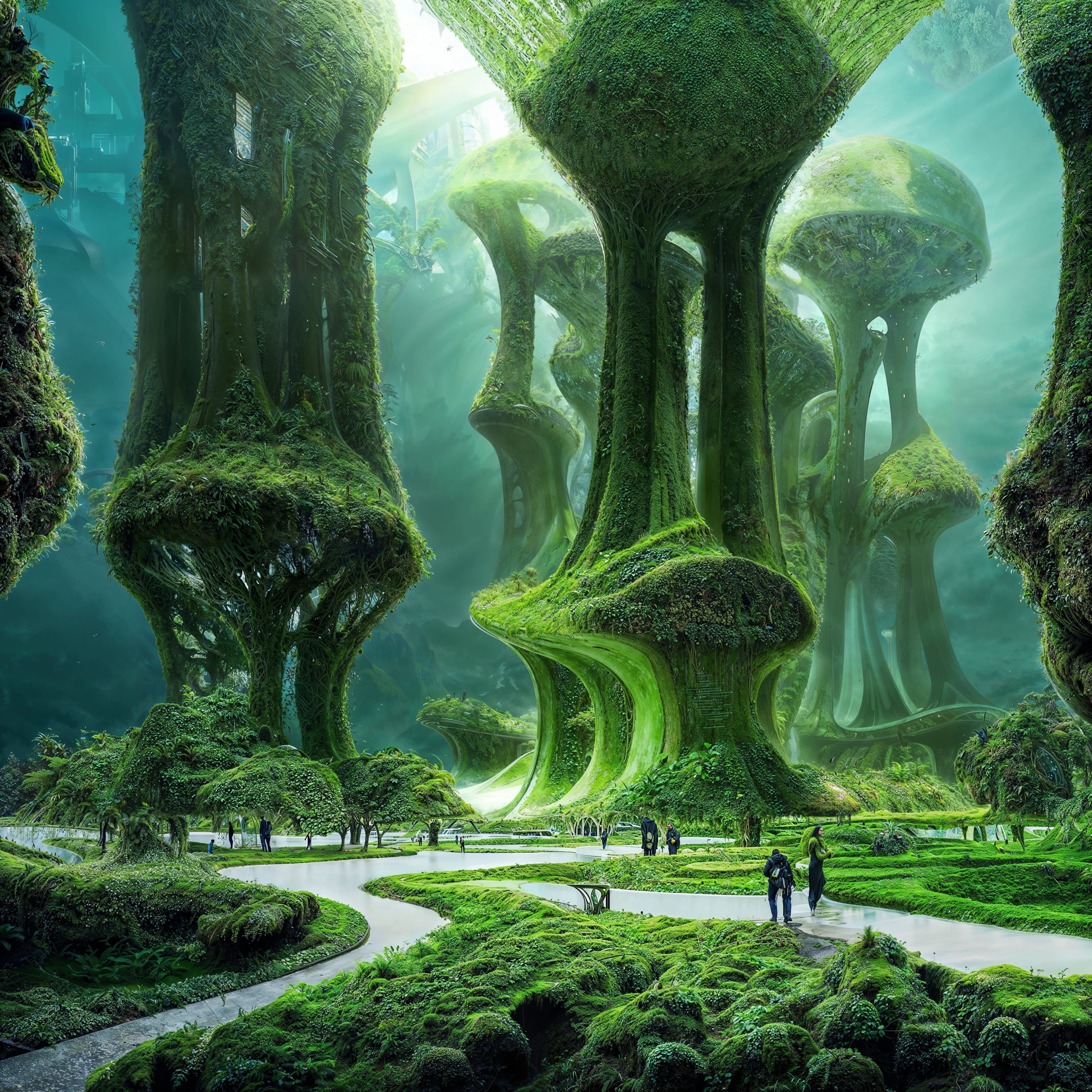
These pieces aim to create a present and future where organic structures act symbiotically and blend seamlessly with their surroundings, creating a perceptive distortion between the invisible limits of the environment and society.
Venturing Deeper
The piece weaves the principles of biomimicry and biophilic design ethos into its very fabric, crafting a narrative that transcends the aesthetic to touch upon the core of sustainability and interconnectedness. Organic technology, led by the ingenious mechanisms of nature, becomes the protagonist in this tale, illustrating a world where structures breathe, adapt, and evolve. The materials whisper secrets of resilience and regeneration, echoing the cycles of life that pulse through the veins of the natural world.
Challenging Notions of Separation
This perceptive distortion challenges the very notion of separation, proposing instead a world where harmony reigns, and the dichotomy between environment and society is reconciled.
A Call to Action
In its essence, this artwork is not only a visual and conceptual exploration but a call to action—a provocative, mysterious invitation to rethink, reimagine, and reinvent our relationship with the world around us. It stands as a testament to the possibility of a future where human creativity and nature’s wisdom converge, crafting a legacy of sustainability, beauty, and mutual flourishing. In this realm, the artwork does not merely exist; it inspires, challenges, and transforms, urging us to consider not just the spaces we inhabit, but the legacies we leave behind.
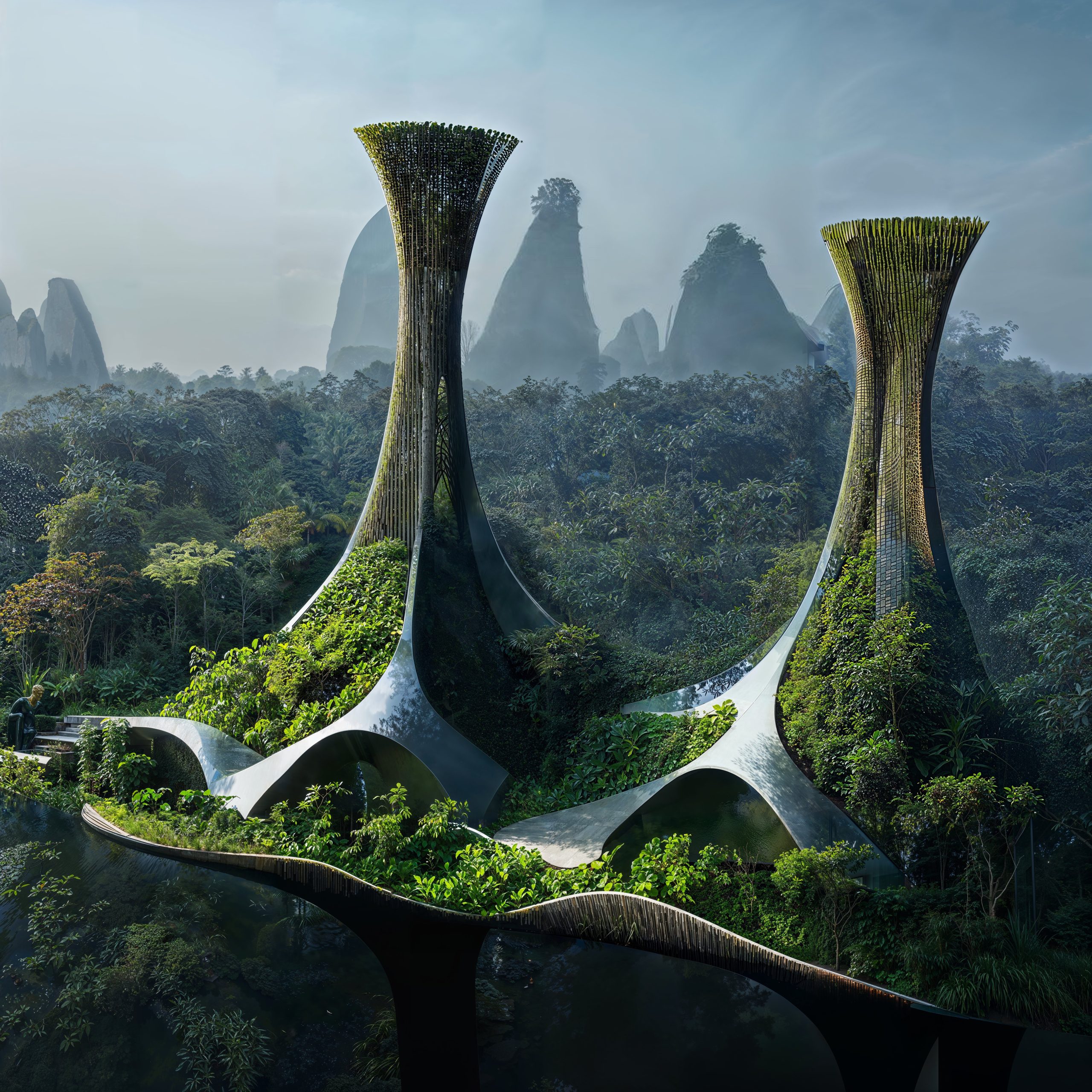

Nature Harvesting Structures
Agricultural Land Use
According to Ray Kurzweil, the World Bank, and the Food and Agriculture Organization of the UN, 38-40% of the earth’s surface is used for agricultural land, and around a third of that is used for arable land, which includes temporary crops. For reference, our cities occupy around 1-2% of the earth’s surface area. In the future, we could have vertical surfaces that hold ecosystems and arable land embedded in an organic habitable structure that integrates with the environment.
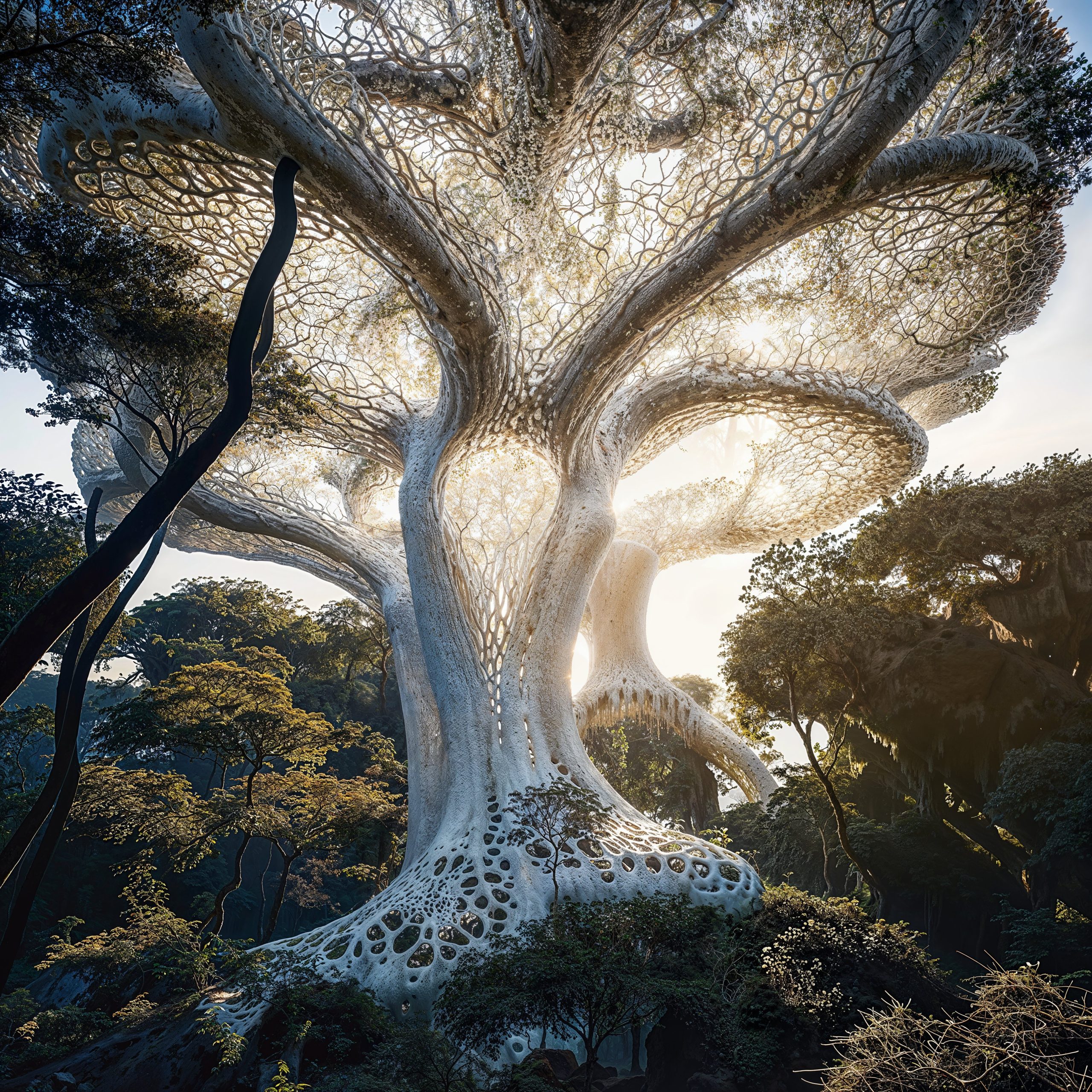
Nature Meditation Structures
Inspired by Fungus
Fungi are some of the oldest species on planet Earth, with fossil records showing that they could have been present even 460 million years ago. Inspired by the Lion’s Mane Fungus, these futuristic structures are breathing architectural systems that resemble natural environments, where nature and architecture become unrecognizable from each other.
Honoring Thoreau and Transcendentalism
Following and bringing to light the work of naturalist Henry David Thoreau, best known for his book “Walden,” and the transcendentalist movement, which emphasized nature, self-reliance, and the intrinsic goodness of people and nature.
Thoreau lived during a time of significant social and political change in the United States, similar to the one we are experiencing now. The mid-19th century was marked by the Transcendentalist movement, which Thoreau was deeply involved in. This movement emerged as a reaction against the intellectualism and materialism of the era, exactly as we need guidance on the future of societies, including the built environment, promoting a philosophy that emphasized the spiritual over the material and the importance of nature and personal intuition.
Embodying Thoreau’s Legacy
I aim to embody and represent Thoreau’s works to continue to resonate today and in the future, advocating for mindfulness, personal responsibility, and a deep connection to the natural world. These pieces offer a reflection on simple living and individual conscience with timeless wisdom for navigating modern life.
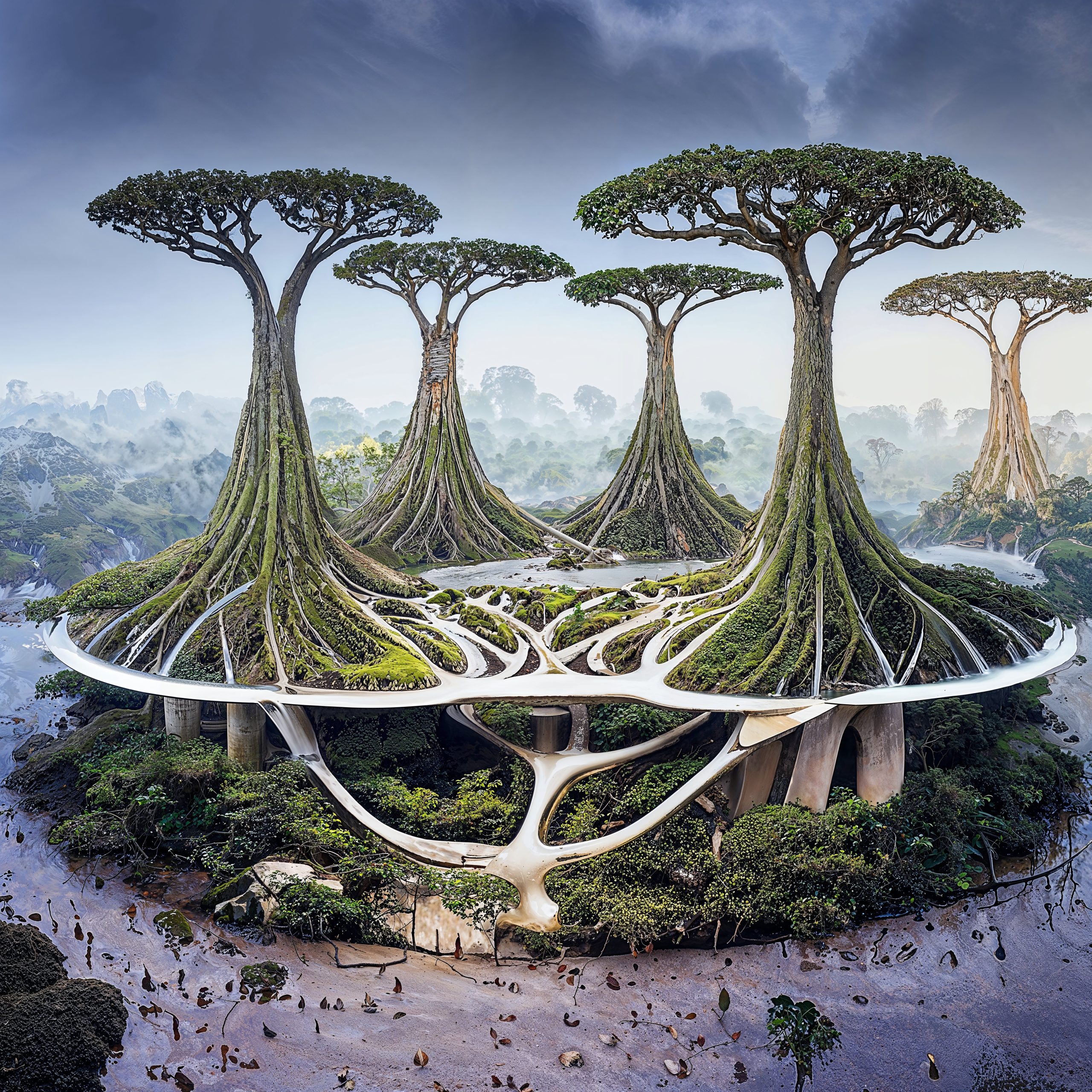
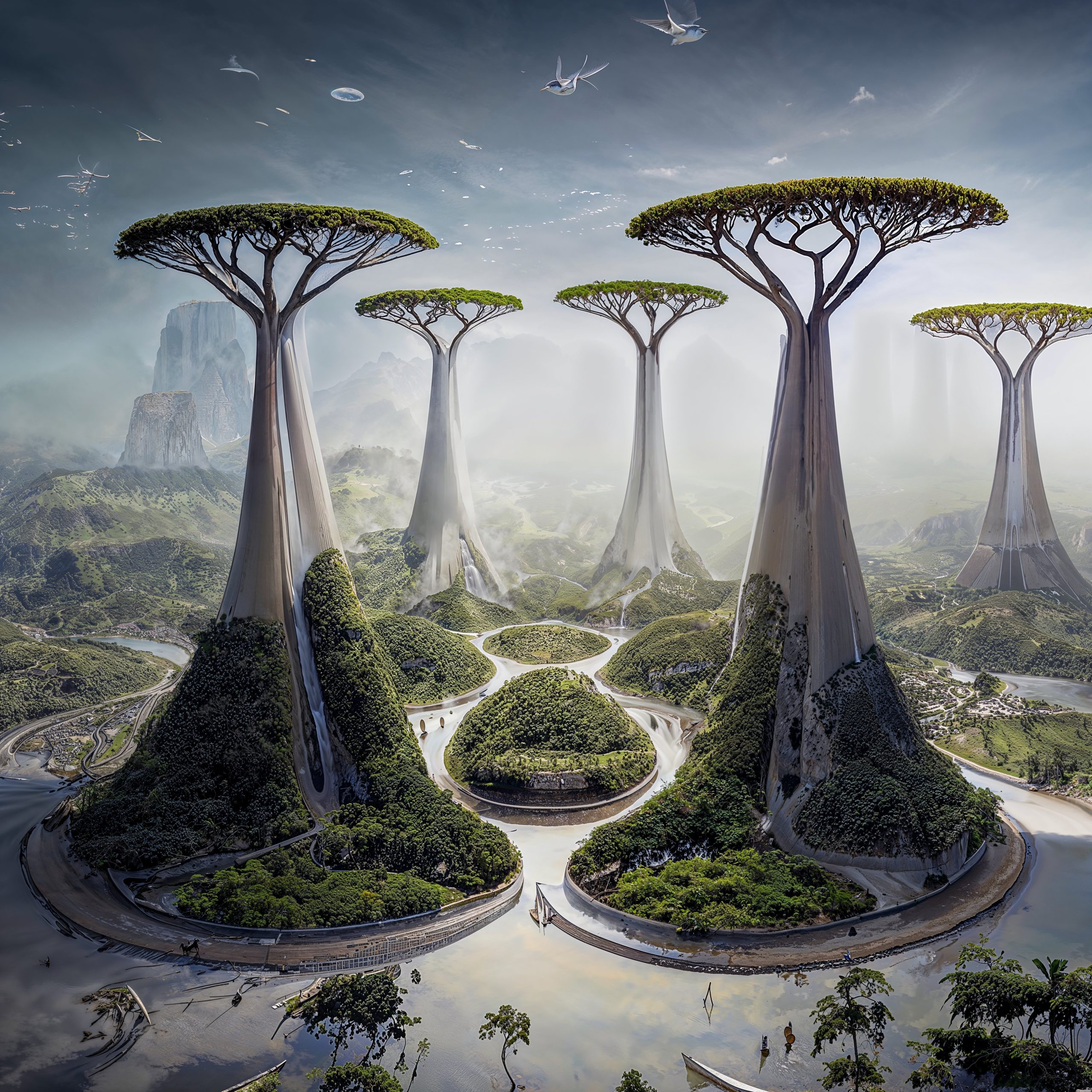
Nutopia
Organic Materials in Computing
The concept of computers that incorporate organic materials into their design is an emerging area of research that intersects the fields of computer science, materials science, and bioengineering. The idea behind using organic materials in computing devices spans several motivations, including the desire for more sustainable and environmentally friendly technology, the potential for biodegradability, and the possibility of creating devices that can interface more seamlessly with biological systems, such as the human body.
Interconnected Environments
You could imagine built environments that could be completely interconnected, such as forests or mycelium in the present, that we could guide to elaborate built environments for us to live in. For the development of our cities, it has been the norm to use the natural environment to our advantage, using rivers, shores, mountains, and valleys for protection and transportation. This is a digital piece not only for artistic expression but a manifestation and continuation of the principles of the transcendentalist and naturalist movement of the 18th century, therefore connecting past ideas and future possibilities in the present.
Technical Process
Advanced AI Techniques
In the development of my digital artworks, I employed an advanced, multifaceted approach centered on the integration of novel artificial intelligence (AI) technologies with specialized post-production techniques. This process began with the utilization of AI CLIP Diffusion models, notably Stable Diffusion, an open-source AI model, which was further customized through the use of ComfyUI and specifically tailored pre-trained models, including those aligned with Lora’s distinct methodologies.
CLIP and ComfyUI
These models are paramount for their capacity to generate high-fidelity images from textual descriptions, a process underpinned by CLIP (Contrastive Language–Image Pre-training), a technology designed to bridge textual and visual representations effectively.
ComfyUI for Intuitive Creation
To facilitate the interaction with these complex AI models and to precisely guide the generation of visual content according to my specifications, I utilized ComfyUI. This interface simplifies the model interaction process, enabling a more intuitive creation of detailed art pieces. The adaptation of pre-trained models specific to Lora’s techniques indicates a targeted approach to achieving a unique aesthetic or thematic expression within the artworks.
MidJourney Model Version 5.1
In parallel, I engaged the MidJourney Model Version 5.1 for additional image generation tasks. The selection of this particular model and its version was strategic, chosen for its unique rendering capabilities and stylistic output that complement the artistic objectives of my project. An iterative process was adopted, involving approximately 100 iterations per piece, to meticulously refine each artwork to its final form. This iterative refinement is critical for aligning the generated images as closely as possible with the envisioned end result.
Prompt Optimization with Chat GPT
To optimize the textual prompts used to guide these AI models, I integrated the capabilities of Chat GPT, enhanced with pre-trained Custom GPT models. This step was crucial for fine-tuning the prompts, ensuring a high degree of precision in the AI’s interpretation of my artistic directives, and thereby improving the relevancy and quality of the generated images.
Post-Production Techniques
The post-production phase of my workflow incorporated advanced editing techniques using Adobe Lightroom and Adobe Photoshop. In Lightroom, I applied personal presets to adjust and standardize the visual tone across all artworks, ensuring a coherent visual identity. Photoshop was utilized for more intricate edits and adjustments, providing the flexibility needed for precise, manual refinement of each piece.
Enhancement with Magnific AI
To further enhance the detail and quality of the images, I employed Magnific AI, a tool designed for the enhancement of visual details through AI-driven algorithms. This technology allowed for the accentuation of textures, clarity, and other visual elements, culminating in artworks that not only embody artistic vision but also stand at the forefront of technological innovation.