Yaoyao Wu
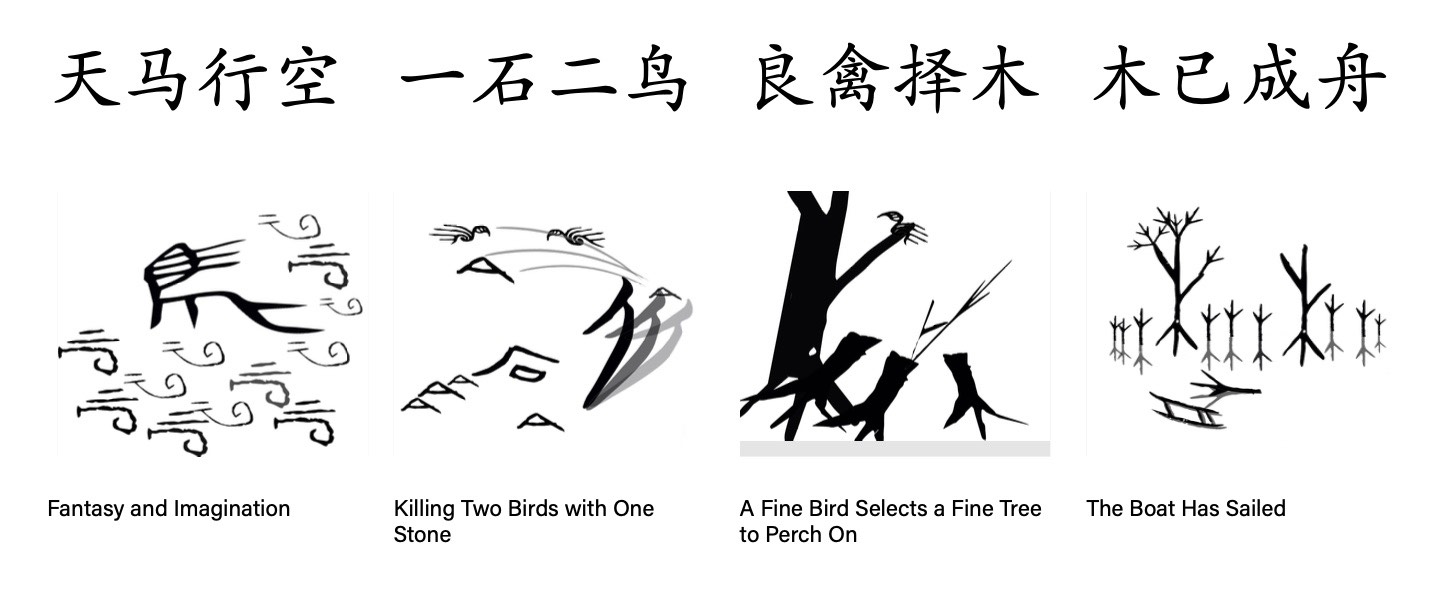
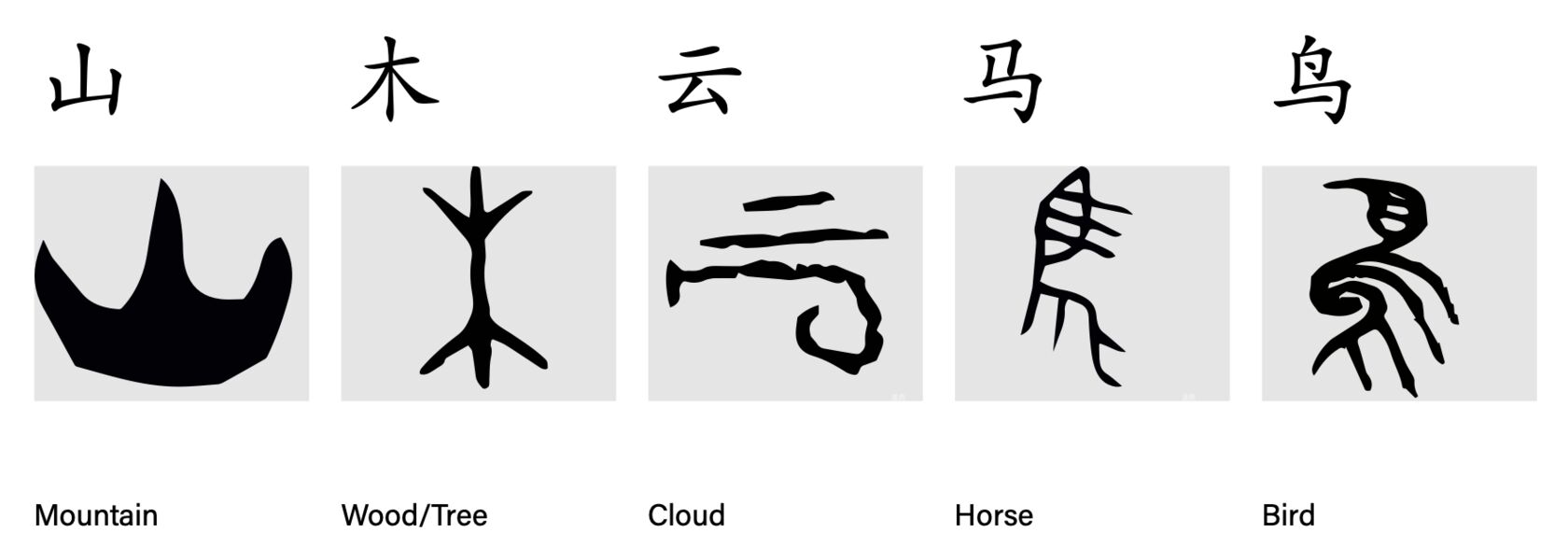
Bridging the Ages (2024) This project is an illustrated exploration of Chinese idioms with Oracle-bone inscriptions and AI, aiming to bridge ancient Chinese culture with modern technology. By combining historical artifacts and advanced AI, it offers a unique perspective on the richness and evolution of Chinese language.
IntroductionOracle-bone inscriptions are the oldest attested form of written Chinese, dating to the late 2nd millennium BC. Inscriptions were made by carving characters into oracle bones, usually either the shoulder bones of oxen or the plastra of turtles. The writings mainly record the results of official divinations carried out on behalf of the ruling Shang dynasty royal family. These divinations took the form of scapulimancy, where the oracle bones were exposed to flames, creating patterns of cracks that were then interpreted. Both the prompt and interpretation were inscribed on the same piece of bone used for the divination itself.
Idioms and Cultural References
天马行空
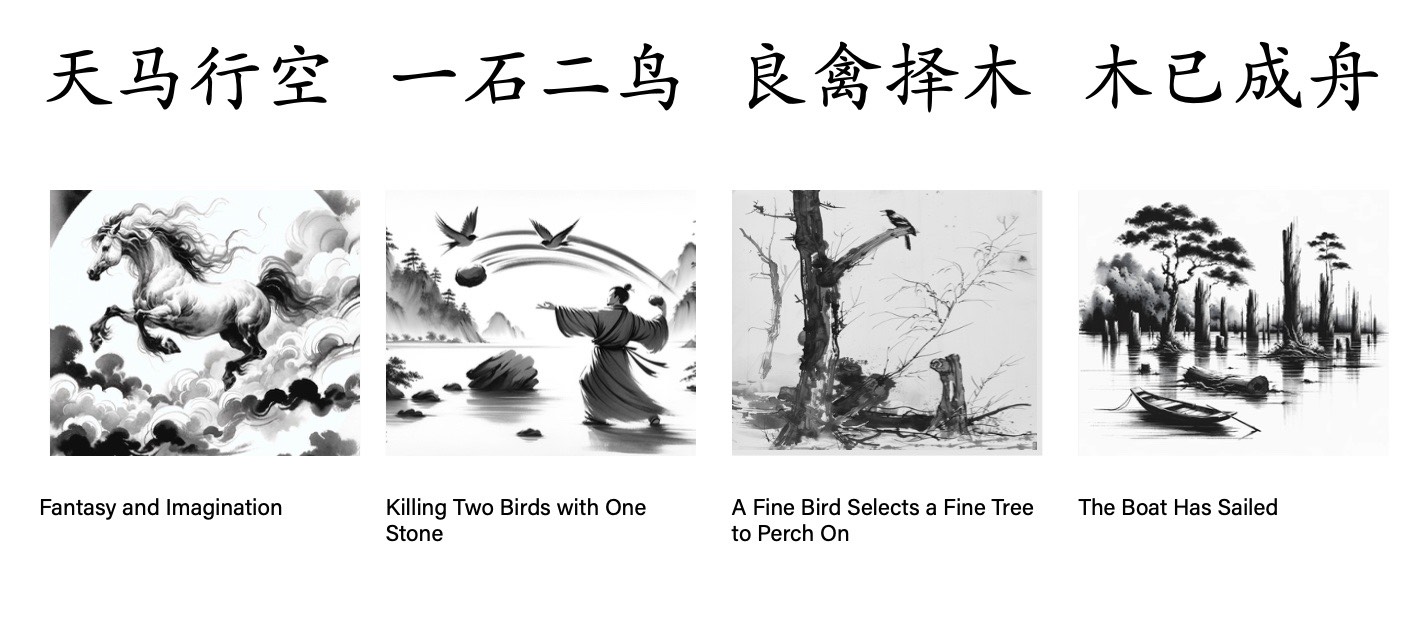
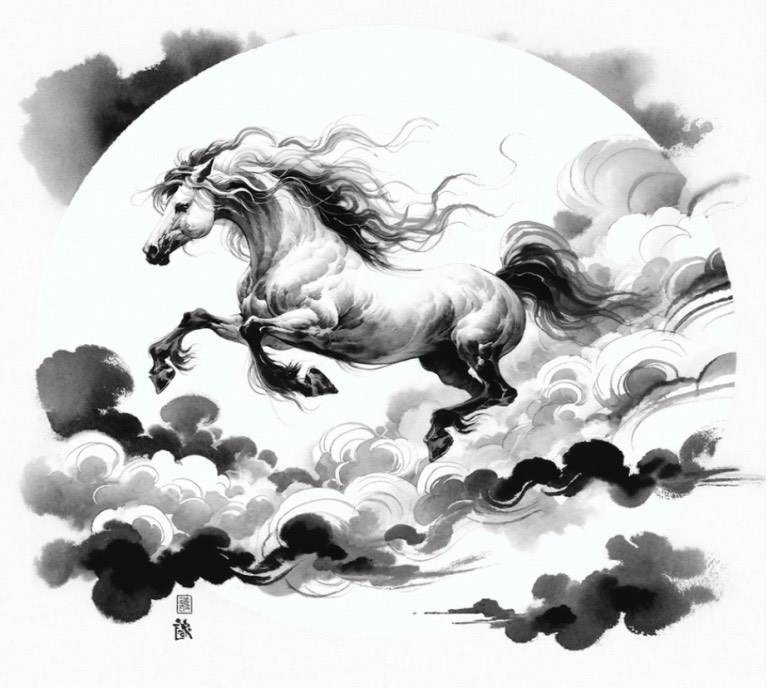
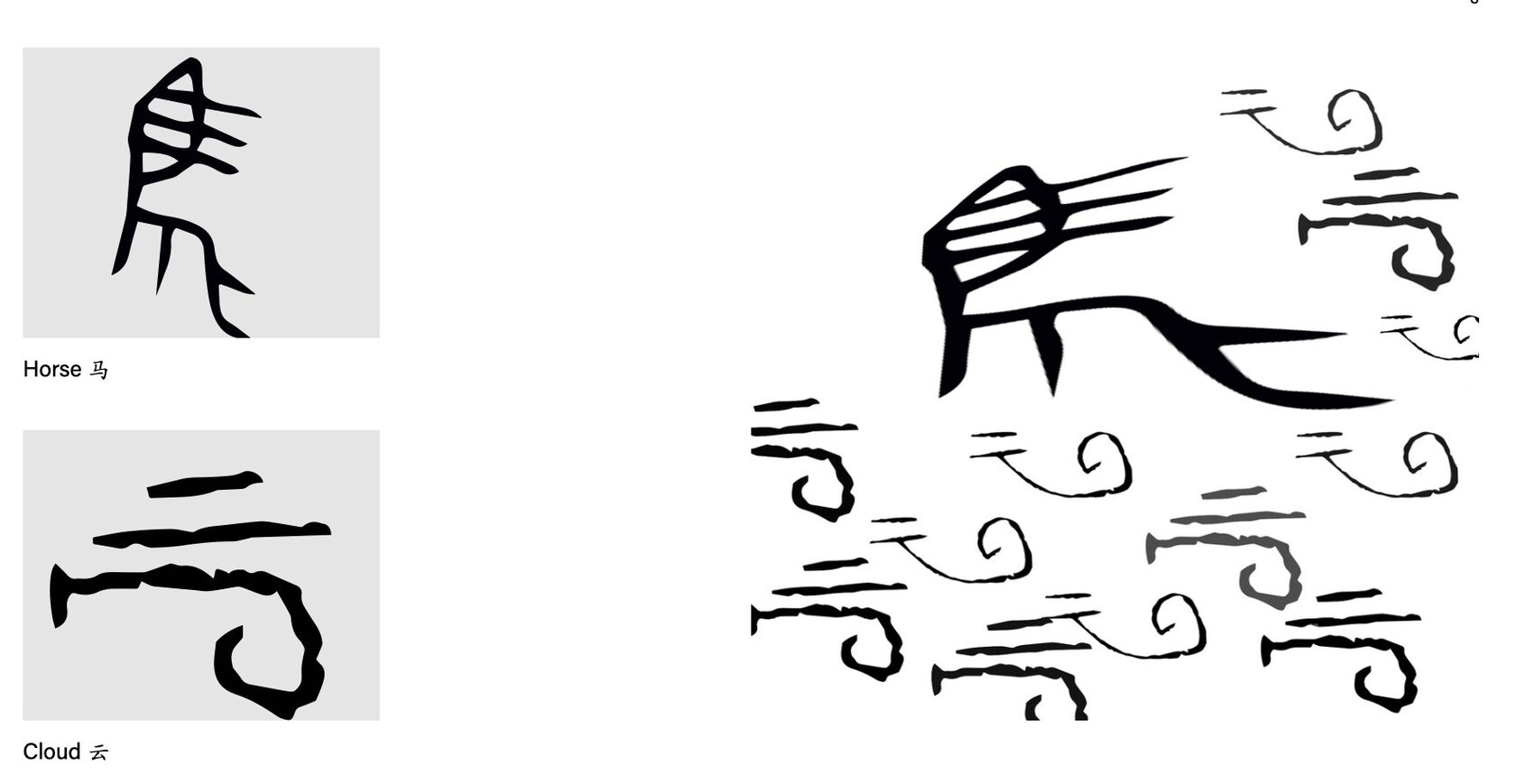
The Chinese idiom “天马行空” trans- lates to “a heavenly steed soaring across the skies” in English. It is used to describe vivid imagination, boundless creativity, or thoughts that are free and unrestrained, akin to a magnificent horse flying freely in the heavens, beyond the mundane world. This idiom often celebrates the spirit of artistic freedom and in- novation, evoking images of limit- less possibilities and the breaking of conventional boundaries.天马行空
The Chinese idiom “天马行空” trans- lates to “a heavenly steed soaring across the skies” in English. It is used to describe vivid imagination, boundless creativity, or thoughts that are free and unrestrained, akin to a magnificent horse flying freely in the heavens, beyond the mundane world. This idiom often celebrates the spirit of artistic freedom and in- novation, evoking images of limit- less possibilities and the breaking of conventional boundaries.一石二鸟
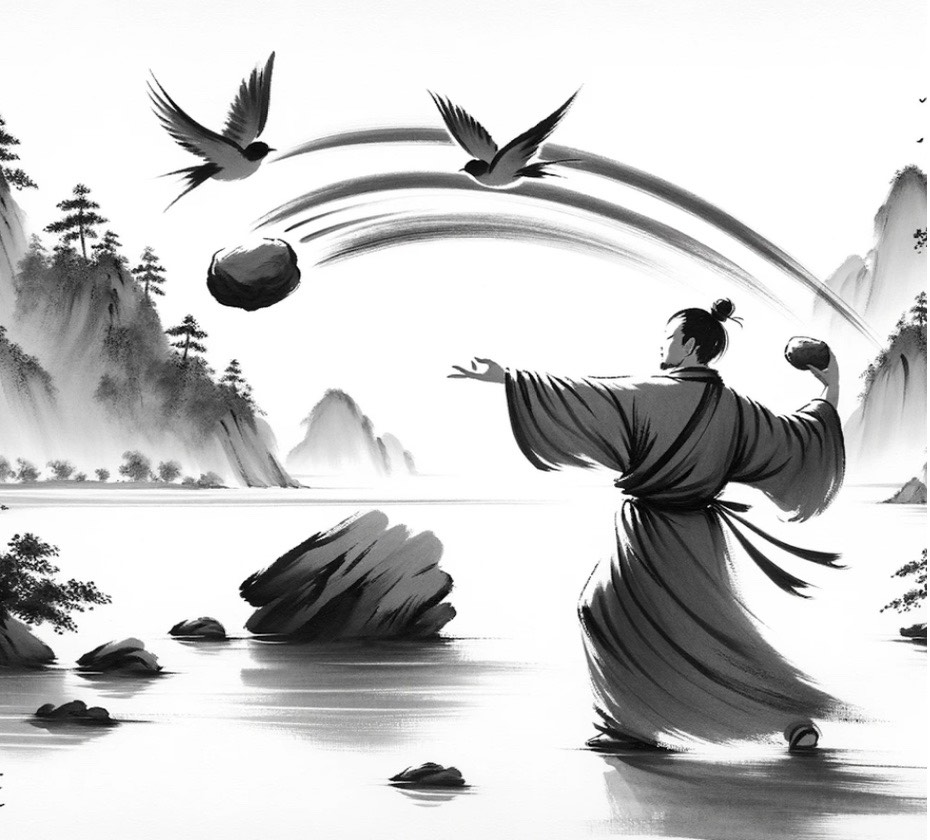
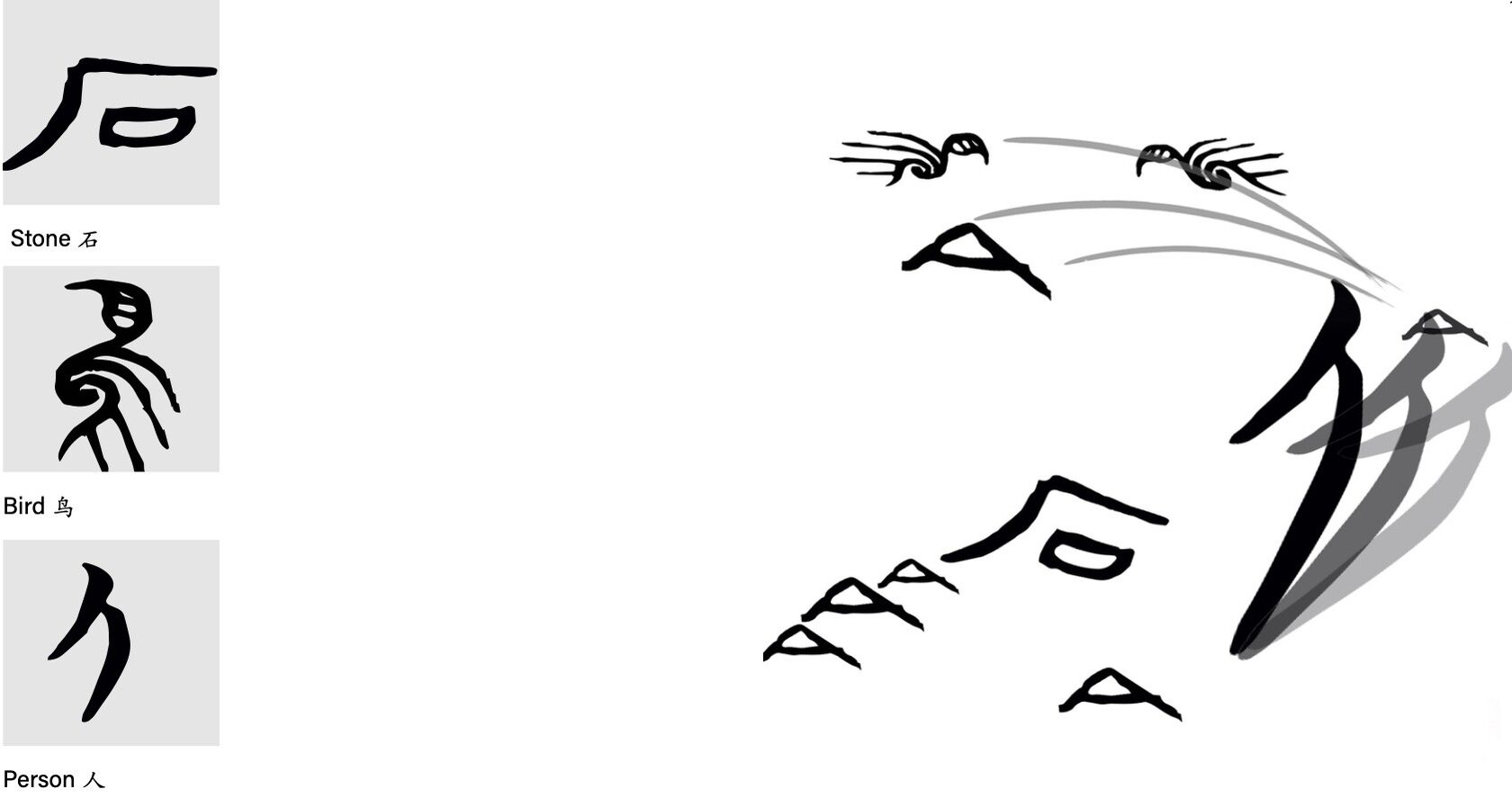
The idiom “一石二鸟” in English is “kill two birds with one stone.” It means to achieve two goals with a single action, suggesting efficiency and cleverness in handling matters that allow one to accomplish more with less effort.一石二鸟
The idiom “一石二鸟” in English is “kill two birds with one stone.” It means to achieve two goals with a single action, suggesting efficiency and cleverness in handling matters that allow one to accomplish more with less effort.良禽择木
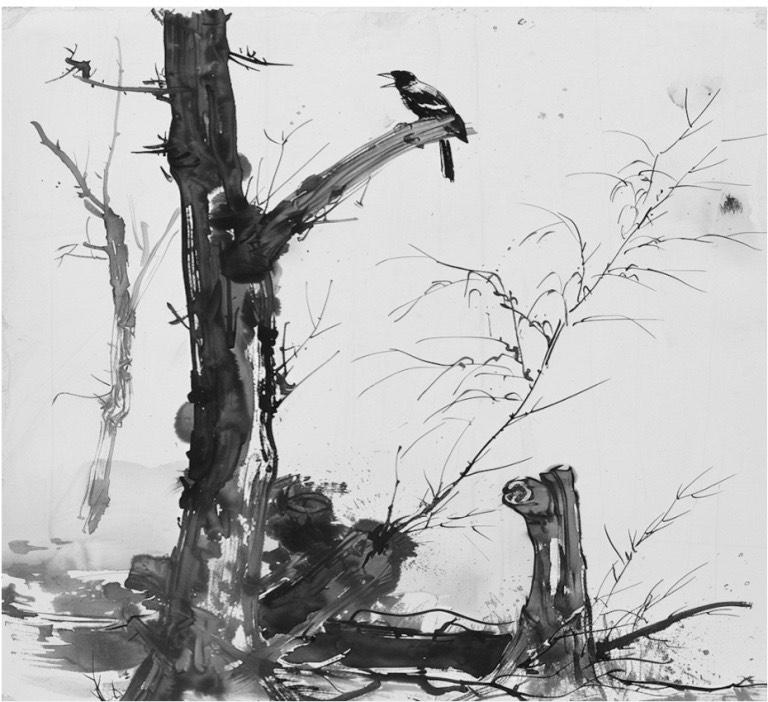
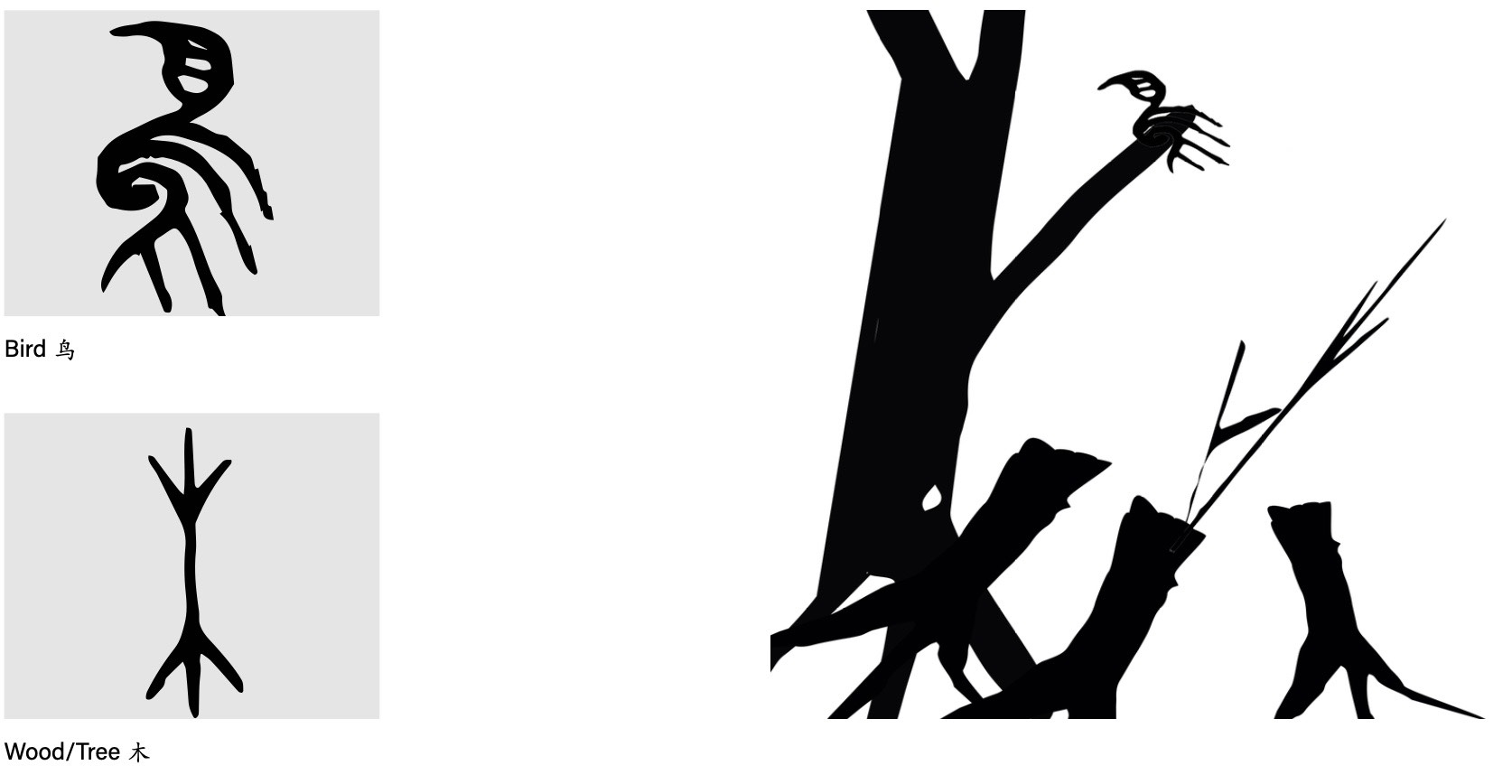
The Chinese idiom “良禽择木而栖” literally translates to “a fine bird se- lects a fine tree to perch on.” It met- aphorically means that a talented or wise person will seek a good master or an environment where they can fully utilize their abilities and thrive. This idiom emphasizes the impor- tance of finding a suitable platform or environment for one’s talents and skills, suggesting that success and fulfillment are not just about indi- vidual capability but also about the context in which one’s talents are applied.良禽择木
The Chinese idiom “良禽择木而栖” literally translates to “a fine bird se- lects a fine tree to perch on.” It met- aphorically means that a talented or wise person will seek a good master or an environment where they can fully utilize their abilities and thrive. This idiom emphasizes the impor- tance of finding a suitable platform or environment for one’s talents and skills, suggesting that success and fulfillment are not just about indi- vidual capability but also about the context in which one’s talents are applied.木已成舟
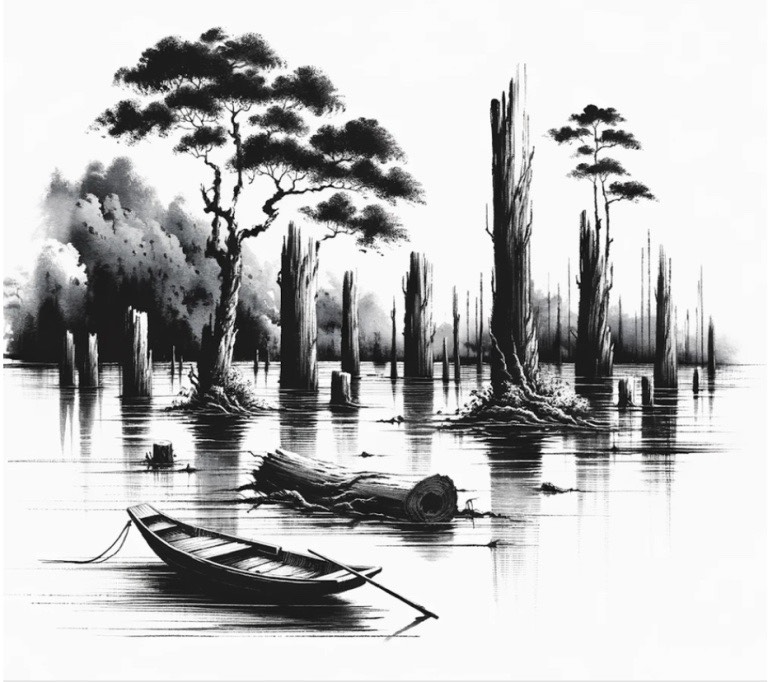
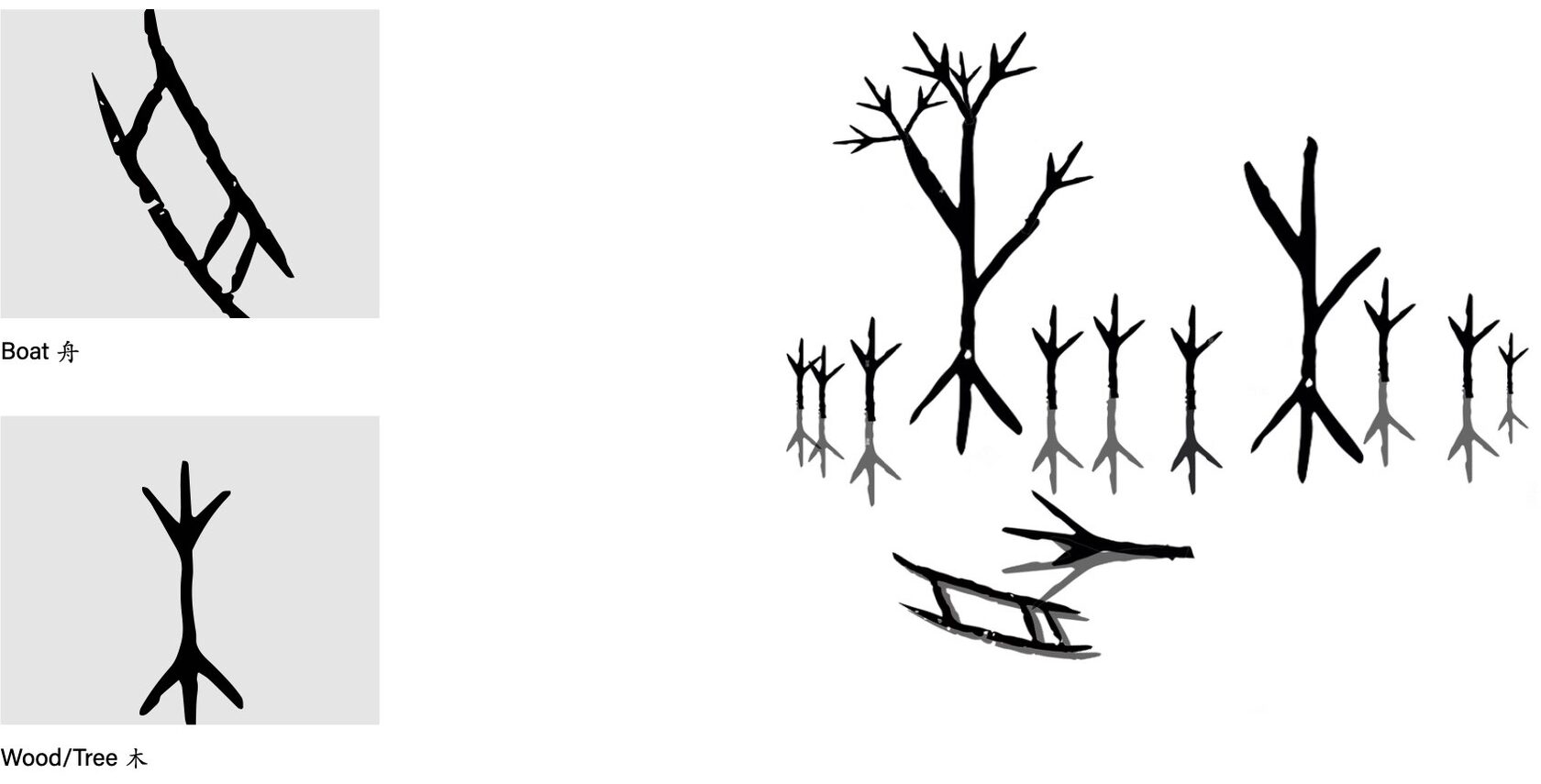
The Chinese idiom “木已成舟” trans- lates to “the wood has already be- come a boat” in English. It meta- phorically means that something has already been done and cannot be changed; it’s a fait accompli. The idiom is often used to describe sit- uations where the current state of affairs is irreversible and must be accepted as it is. It emphasizes the finality of actions taken, suggest- ing that once certain steps have been made, there is no turning back, much like when wood is carved into a boat, it can no longer return to its original form as a tree.木已成舟
The Chinese idiom “木已成舟” trans- lates to “the wood has already be- come a boat” in English. It meta- phorically means that something has already been done and cannot be changed; it’s a fait accompli. The idiom is often used to describe sit- uations where the current state of affairs is irreversible and must be accepted as it is. It emphasizes the finality of actions taken, suggest- ing that once certain steps have been made, there is no turning back, much like when wood is carved into a boat, it can no longer return to its original form as a tree.