Daniel Geng
Daniel Geng*, Aaron Park*, Andrew Owens (2024)
Visit our website for more information and examples!
Factorized Diffusion is a method that enables different text conditioning on different components of an image. For example, conditioning low and high frequencies on different text allows us to make images that change appearance when seen from a distance. These are called hybrid images, and were first introduced by Oliva et al. For more examples, please see our hybrid images gallery.
https://dangeng.github.io/factorized_diffusion/static/videos/teaser/teaser.hybrid.mp4
Our method can also make what we call color hybrids: images that change appearance when color is added or subtracted. Interestingly, because the human eye cannot see color under dim lighting, there is a physical mechanism for this illusion—these images change appearance when taken from a brightly lit environment to a dimly lit one. These images are generated by conditioning grayscale and color components on differnt prompts. For more examples, please see our color hybrids gallery.
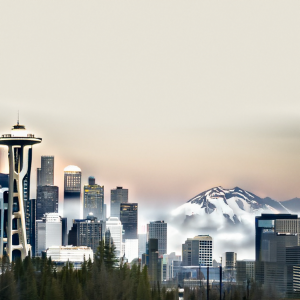
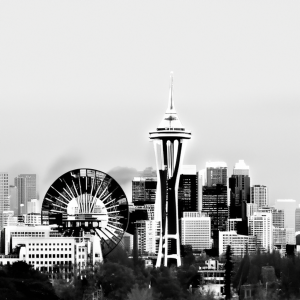
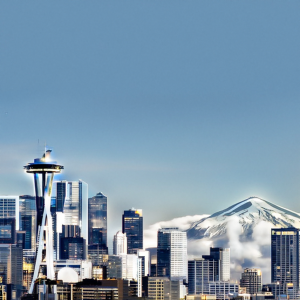
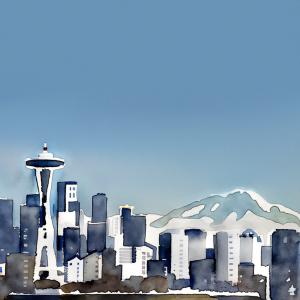
As a sidenote, we also show the design process of this year's CVPR T-shirt and other samples that were "rejected". To make the hybrid image illusion on the T-shirt, we generate inverse hybrids which is conditioned on a real photo of the seattle skyline taken by Pavol Svantner(@palsoft), and then print the letters 'CVPR' on top of the image.
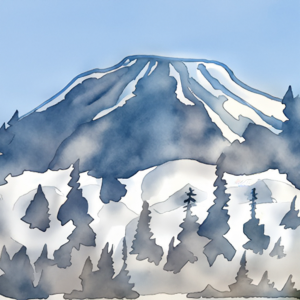
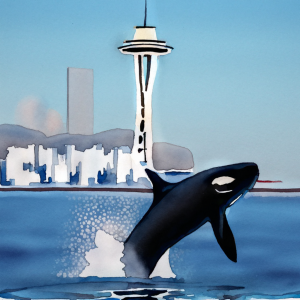
Here we show a gallery of some of the illusions that we have tried using real images. The left top image, which is the basis of this year's T-shirt design was generated with the text prompts, "a watercolor of the seattle skyline with mount rainier in the background" and "the text 'CVPR'".