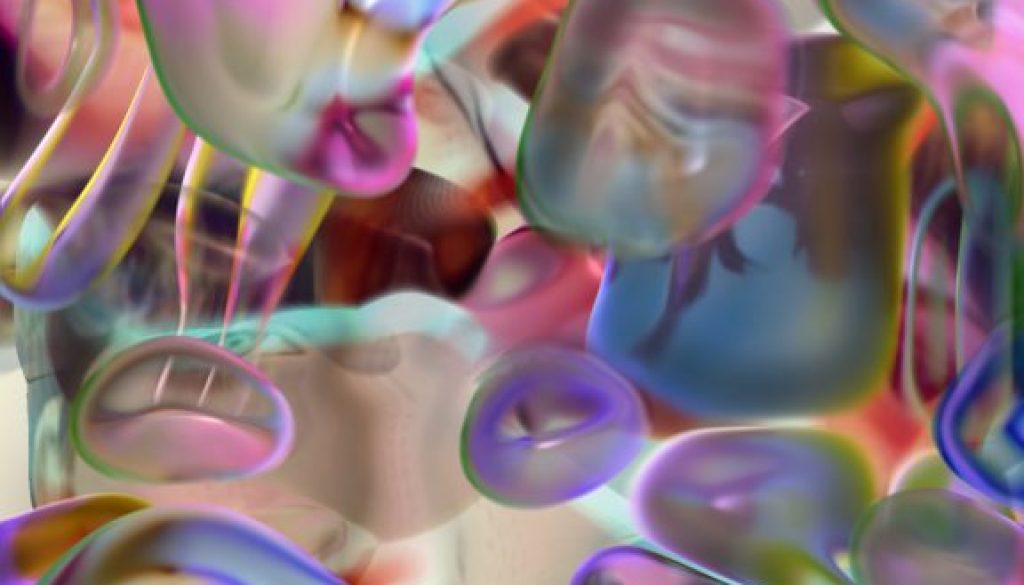
pooling, 2024
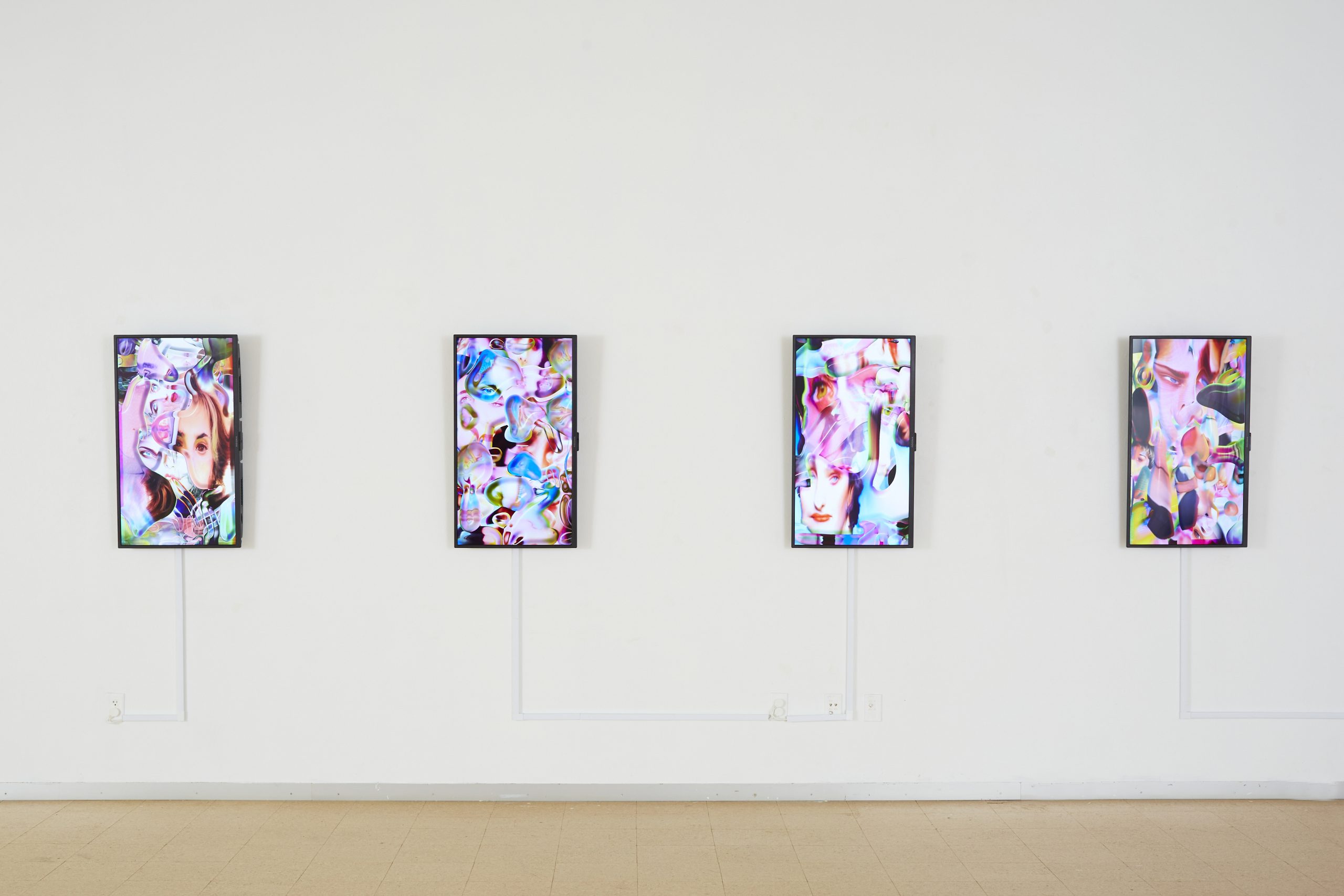
4-part/ongoing video loop series with photos, face-tracking AR, machine learning, and digital animation
Computational processes of all kinds depend on sources of random numbers for their accuracy and efficacy, but computers cannot generate genuine randomness on their own because they work algorithmically, So natural sources are needed.
For instance, the digital encryption company, Cloudflare, directs a camera at a wall of lava lamps and measures the image to extract random numbers that make their encryption processes reliable. As natural beings, we too must be essentially indeterminate, though the technologies we interface with daily track our movements and attention in an ongoing attempt to represent and predict us.
In machine learning, diffusion models use noise to deconstruct and then predictively recreate what they are fed of reality. For the pooling video series, a machine learning model is trained on a massive collection of distorted images of the artist’s face, previously made through an incessant process of misusing face-swapping AR filters. The model generates new faces.
Then, computer generated fractal noise, a type of pseudo-random visual pattern used in graphics to simulate natural shapes and motion, modulates the faces in layers. These faces summoned from noise become their own never-ending lava lamps.