The Ancestor Database (2023)
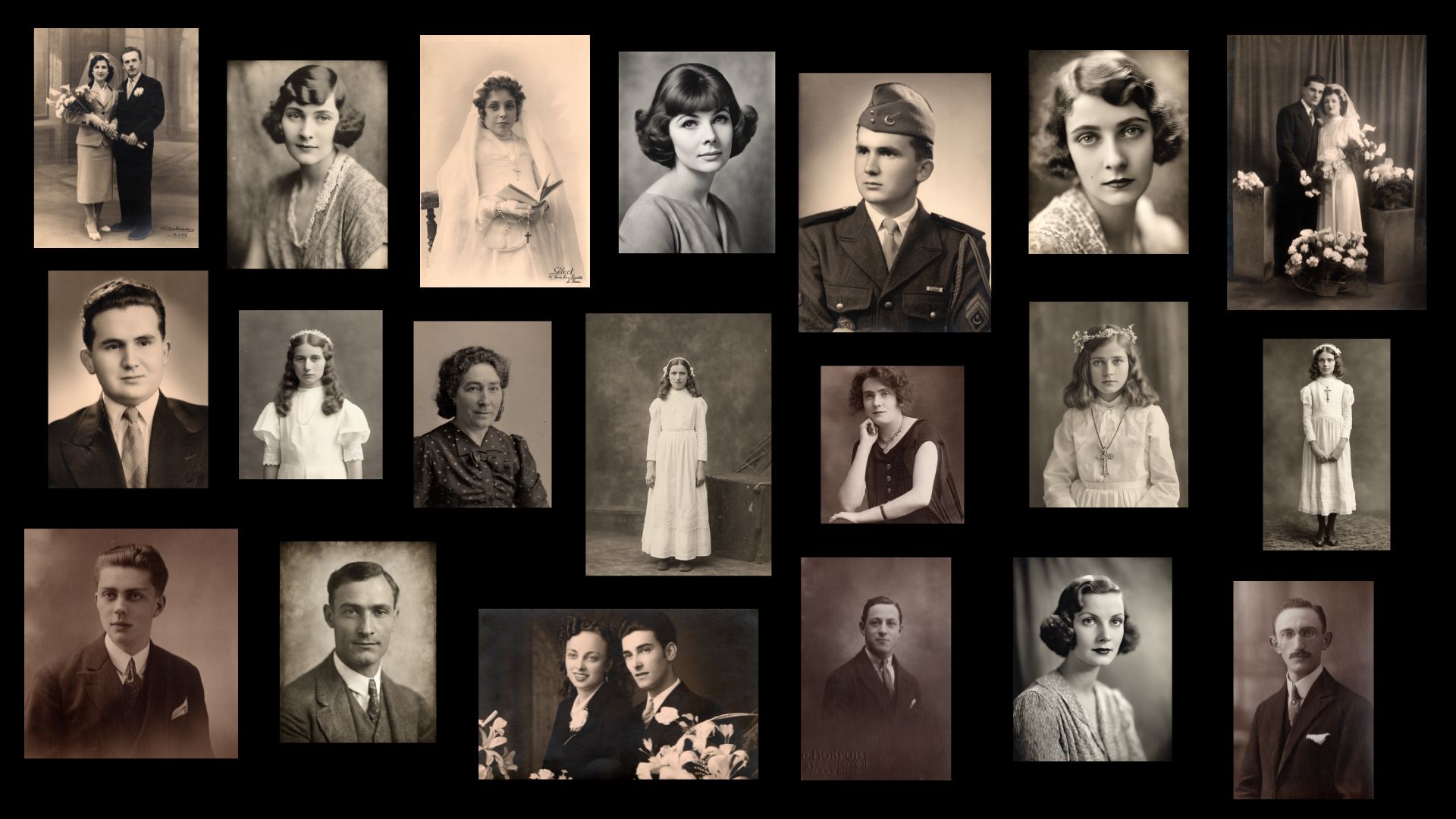
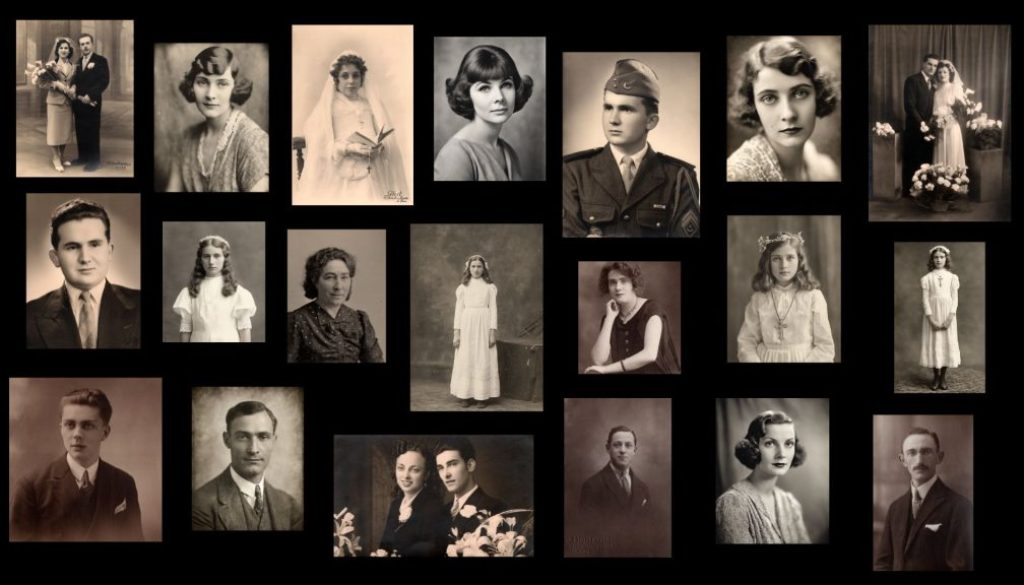
The work ‘The Ancestor Database’ offers a reflection on memory metamorphosis. It creates a dialogue between family photographs purchased at a flea market, silent witnesses of forgotten existences, and portraits generated by artificial intelligence. In the nooks of flea markets, a singular discovery catches the eye: photographs from family archives, relics of a bygone era, reduced to mere anonymous commodities. Buying someone else’s memories is an act paradoxically similar to the trade that digital platforms make of our memories. The immortalized faces, once they no longer evoke anything for anyone, become memorial accidents produced by photography. Identical to avatars, they are the last representatives of an indistinct mass of forgotten individuals. Fallen memories, these photographs have lost the only fragile guarantee against their sale: affective value. Have they lost their essence as a result? These authentic photographs are presented alongside synthetic images, seemingly similar, they are the fruit of generative artificial intelligence. AI here produces the reverse accident to photography: it randomly creates the faces of fictional lives. These fictitious images, products of the algorithm, question the dichotomy between authenticity and fabrication, between memory and oblivion. This work proposes a mise en abyme of the phenomenon of creation with generative artificial intelligence: it appropriates personal photographs to create, in the manner that large language models appropriate the photos of millions of individuals to in turn be capable of generating images. Face to face, fallen and invented memories mutually question their essence. Both have a monetary value insofar as the former were purchased and the latter paid to be generated. The initial materiality of the first seemed to ensure them a greater longevity, although their existence becomes as precarious as the second as soon as no one remembers them. These personal archives, become artifacts of the human condition, can be easily substituted by AI-generated images, questioning the foundations of our relationship to memory and identity.