Reflections on Mechanical Creativity
Walter Benjamin’s 1935 essay The Work of Art in the Age of Mechanical Reproduction argued that technologies like photography and film transformed how art is created and perceived, eroding its unique “aura” tied to a specific time and place. Today’s advent of artificial intelligence represents a comparable upheaval: machines are no longer merely reproducing art but generating it, raising fresh questions about creativity’s nature and the artist’s role.
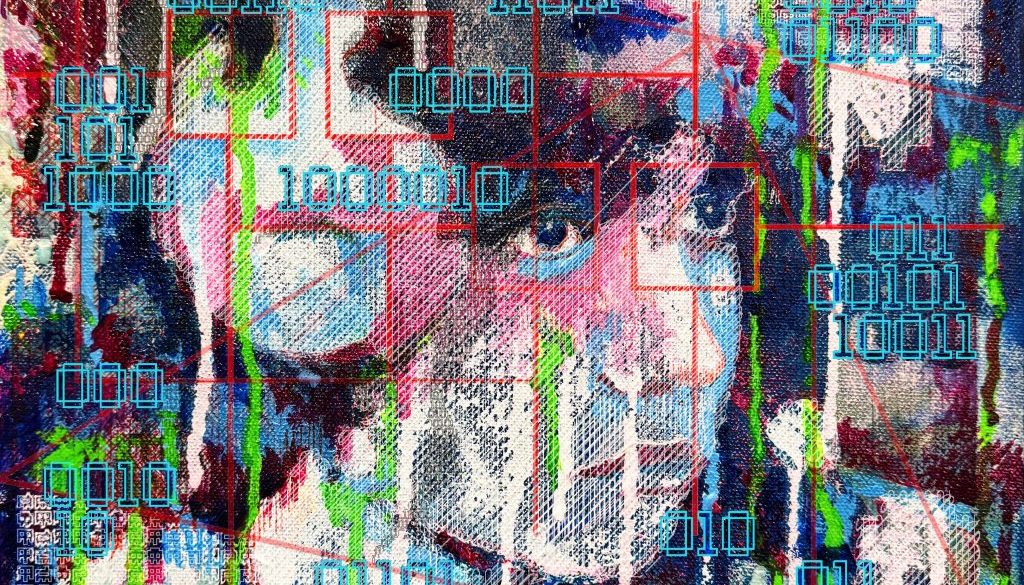
Artist and technologist Pindar Van Arman confronts this moment through his Reflection series, asking: What is the work of art in the age of Mechanical Creativity? As a classically trained painter, Van Arman builds robotic systems that don’t just follow preprogrammed commands but evaluate and respond to their own outputs in real time. His goal is to replicate the recursive “seeing : making : seeing” loop that human artists experience, thereby uncovering what it means for a machine to “see” aesthetically.
Van Arman’s approach draws on Marvin Minsky’s Society of Mind, viewing creativity as a collaboration among multiple “agents” that assess structural, dynamic, and aesthetic aspects of a work as it unfolds. By integrating cameras and responsive algorithms since 2010, his robots “see” each brushstroke’s unpredictable physical outcome, drips, blobs, and blends on textured canvas, and use those variations as new inputs for subsequent decisions. This closed-loop design transforms serendipity into a generative force, yielding emergent patterns that neither pure code nor pure chance could achieve alone.
Influences on Van Arman include Paul Klee’s notion of a continuous feedback loop in the creative act. Where making and receptive evaluation occur in tandem, and Harold Cohen’s critique of deterministic art making. Cohen believed that without genuine feedback, computational art remains confined within a bell curve of possibilities. In dialogue with Cohen, Van Arman embraced neural networks and physical feedback to push beyond deterministic limits, seeking true emergence in machine-generated art.
By exposing his systems’ decision-making processes, effectively opening the “black box” of generative AI, Van Arman’s Reflection works offer viewers both the final painting and a step-by-step journey through its creation. His project invites audiences to witness a synthetic creative mind at work, exploring how machines might not only imitate but also extend human creativity. In doing so, Van Arman’s art encourages reflection on our own role in shaping the technologies that increasingly mirror, and even transform, what it means to create.
Pindar Van Arman – 2025 – paint.bot | vanarman.com | instagram | twitter