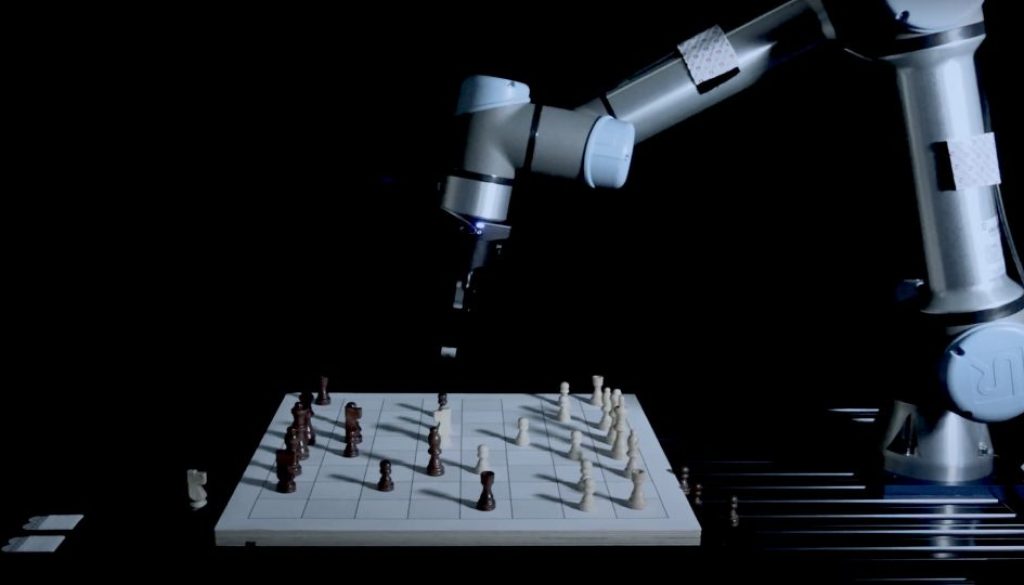
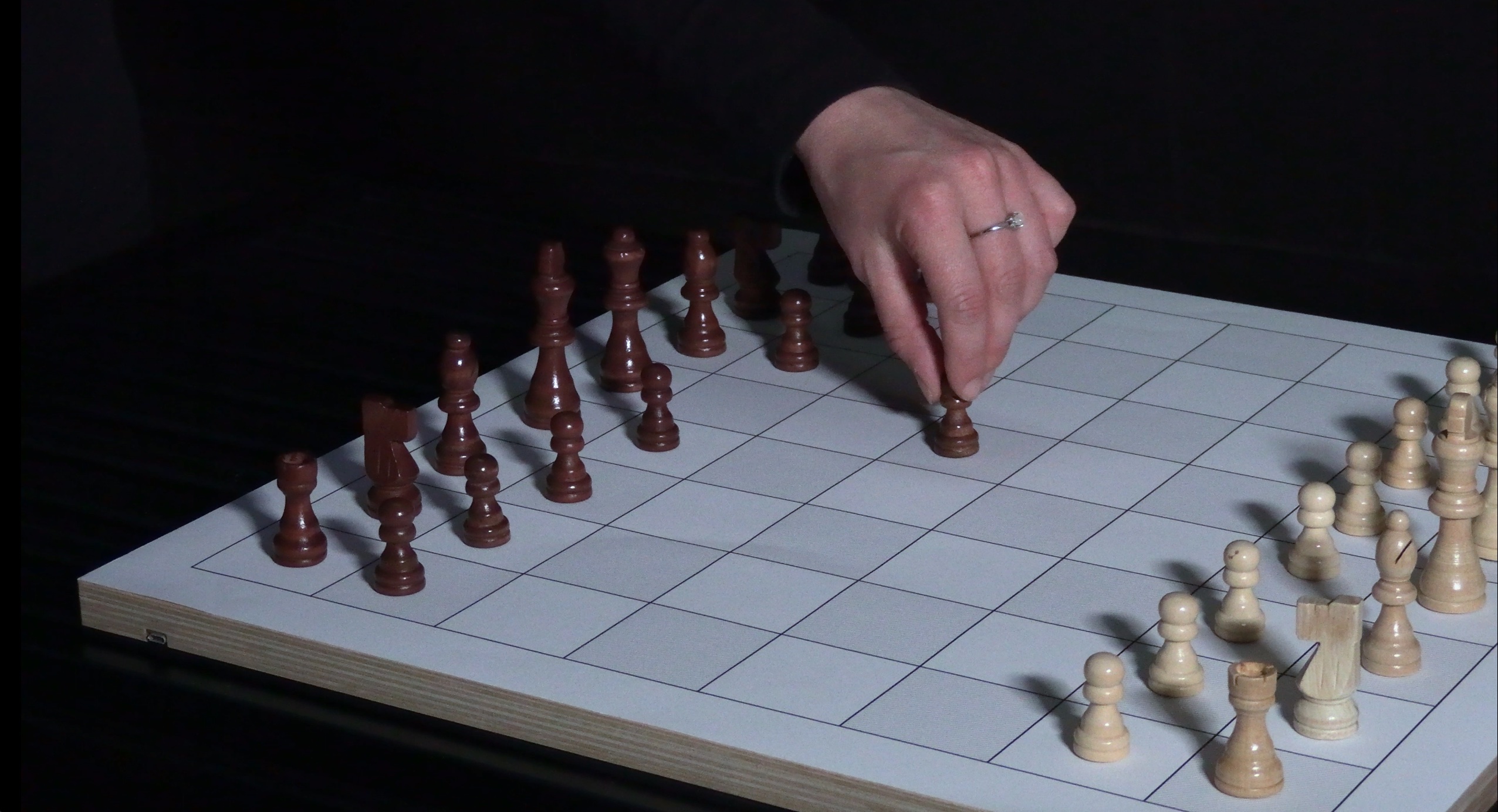
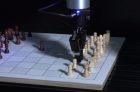
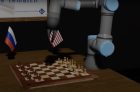
‘Tasker’ uses an automated interactive chess board and gallery visitors are invited to play chess moves on a wooden, tournament style chess board closely modelled on the set that Gary Kasparov played against IBM’s Deep Blue in 1997.
Their opponent is a robot arm that responds to their moves, making moves, taking pieces, much like a human player.
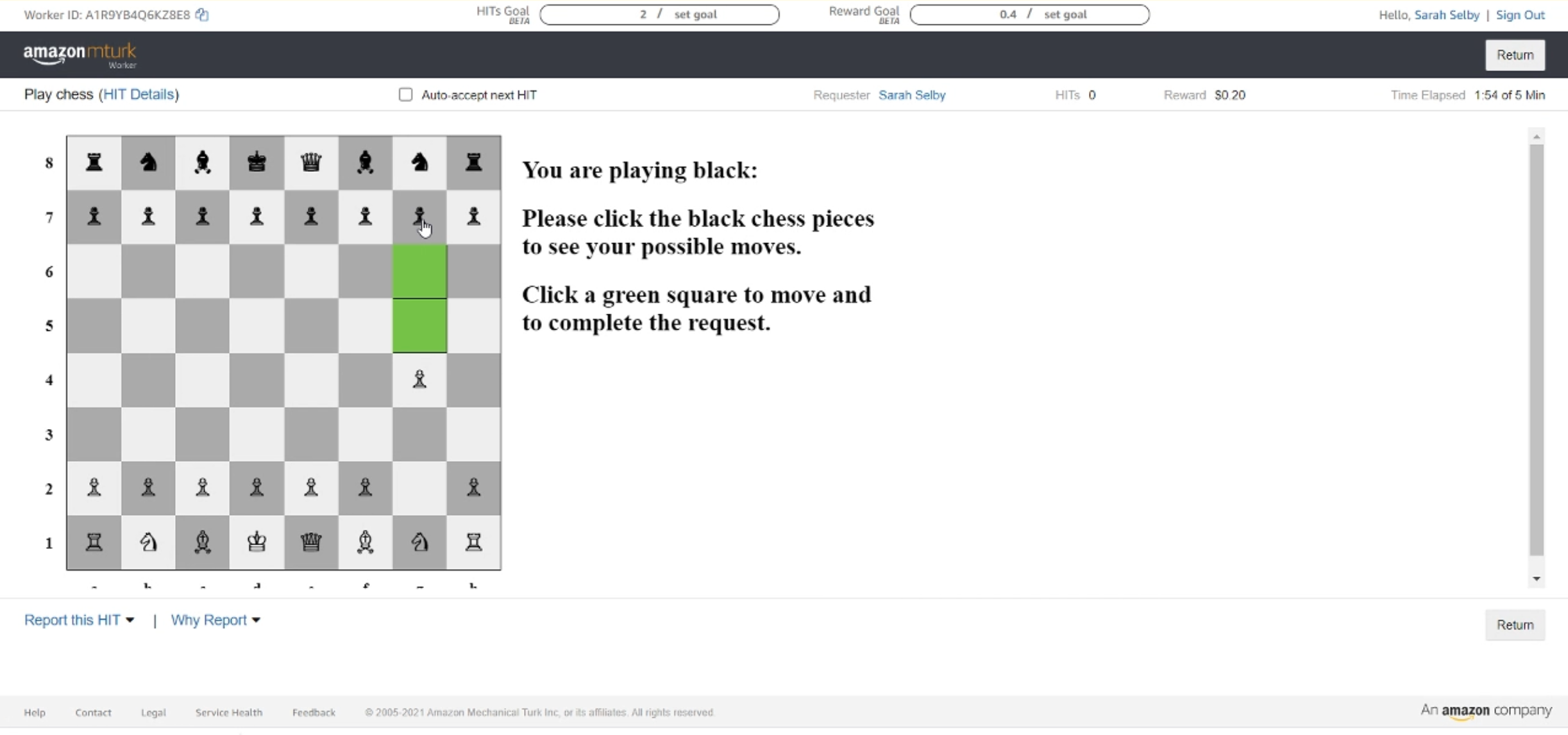
Whilst the gallery player may think they are playing a chess AI system, in fact after each of their moves the chess system posts a task or HIT (Human Intelligence Task) on the Amazon remote labour platform mTurk.
The resulting move, executed by the robot arm, has been chosen by a remote mTurk worker.
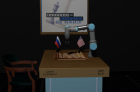
A screen elsewhere in the installation shows the mTurk dashboard and task process.
Tasker is a new collaboration between Sarah Selby & Rod D that is currently in production.
For the CVPR AI Art Gallery Sarah and Rod have produced a prototype of the artwork with video documentation of aspects of the piece in operation.

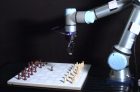
Tasker seeks to highlight the collective and collaborative intelligences behind artificial intelligence and its emergent qualities. It explores the globalised distribution of labour that underpins many machine learning ‘AI’ systems and the ethical issues that arise from this.
Background:
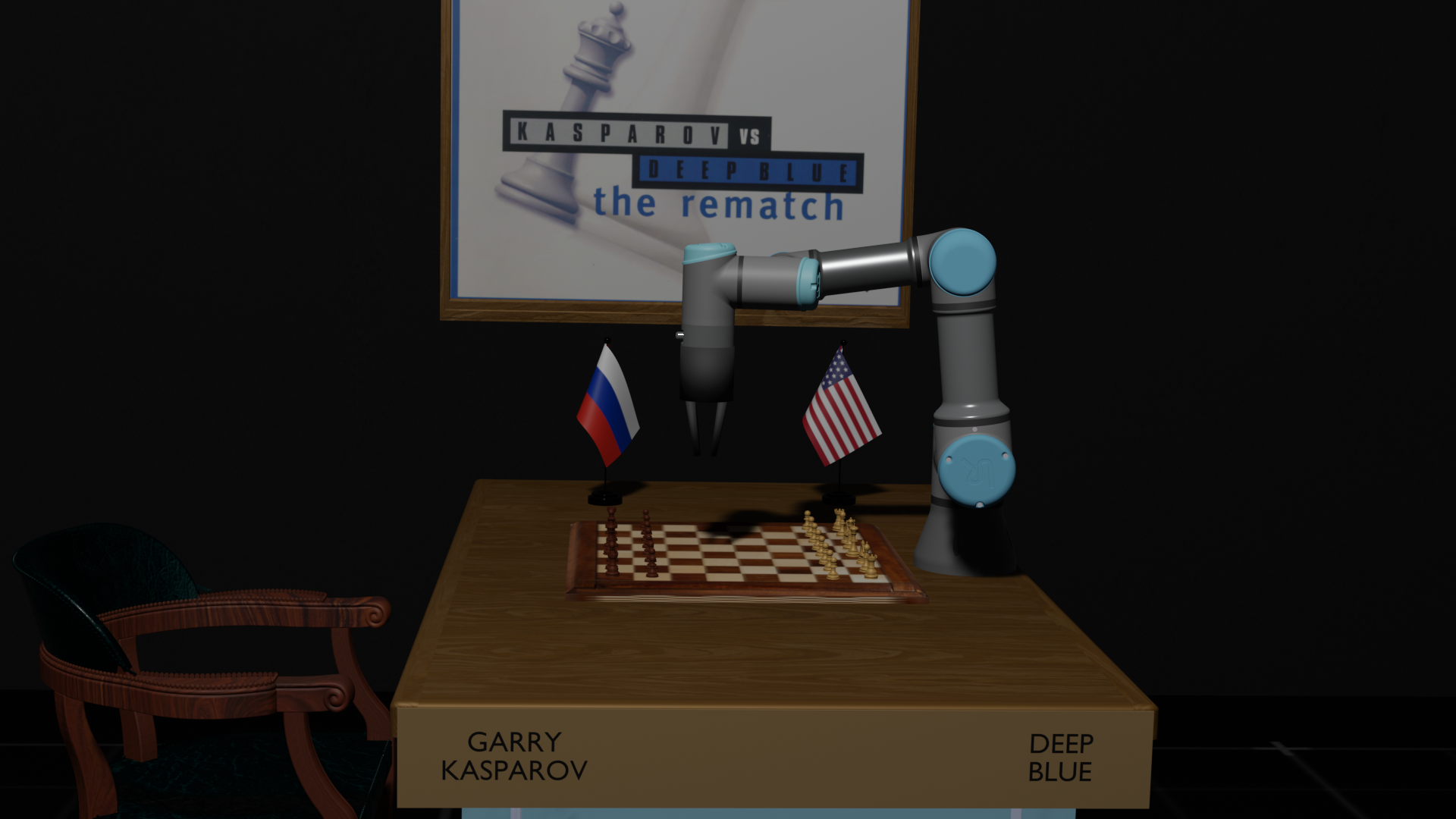
It might be argued that the age of ‘AI’ began on February 10th, 1996 when Gary Kasparov, the world chess champion, first lost against IBM’s Deep Blue computer in a highly publicised chess match (and a rematch in 1997). The loss was a significant moment in the history of chess and artificial intelligence, signalling the increasing automated capability of computers. With its limited, abstract rules chess has been a metric for testing and thinking about automated systems since the original Mechanical Turk automaton in 1770. This and the hidden labour behind AI systems is the starting point for Tasker.
Much of the public debate about ‘AI’ and language models like OpenAI’s ChatGPT has focused on the jobs they will apparently automate. But behind all machine learning systems are huge numbers of anonymous people who are employed to label images, text, audio and video to produce annotated datasets, or to test and train machine learning systems.
This huge army of labellers are often called taskers or annotators and work remotely, for low pay, on piece work across platforms like Amazon Mechanical Turk / mTurk or Remotasks.
Tasker challenges people’s perception of what ‘AI’ is and creates tangible interactions between users and remote taskers, humanising them and highlighting the unseen work that they do.